Tuesday, 26 January 2021

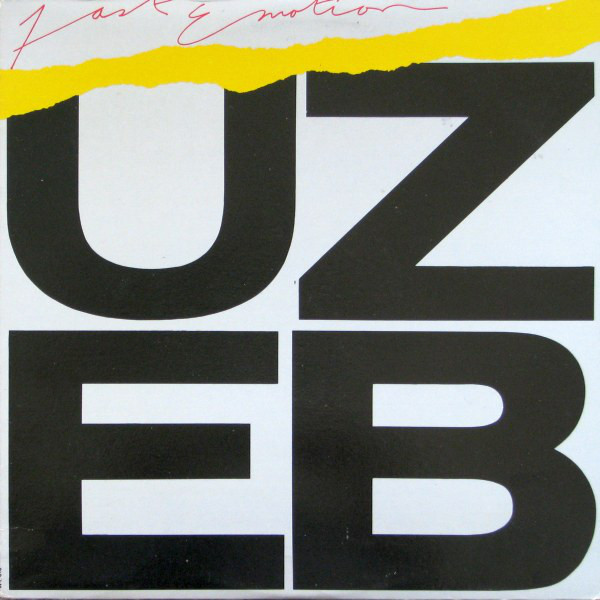
UZEB


“Fast Emotion”


The genre of music that during the 1970’s became known as “fusion” is usually defined as an amalgam of jazz and rock. That definition is perhaps an over simplification that probably has more to do with our insistence on labeling everything as opposed to just letting the music speak for itself. It does need to be acknowledged however that the younger generation of musicians who had been raised on rock and roll wanted to bring those musical sensibilities to the more complex world of jazz. Most importantly, the replacement of acoustic instruments (the normal component of a jazz group) with electric instruments provided opportunities for a new sonic pallette, one that would allow the musicians to create and explore different sounds and techniques. 


One of the better groups to perform this type of music were UZEB, who hailed from Quebec. The band started in 1976 as a duo comprising of Alain Caron on bass and Michel Cusson on guitar. The band evolved fairly quickly into a quartet with the addition of a drummer and keyboardist. They became quite popular in their home province performing a style of music that generally is more of an acquired taste. I suspect that had to do primarily with the band’s superlative musicianship, and to a lesser degree with the parochialism of Quebecois culture. The band has always been exclusively Francophone, although the members have worked with some very prominent musicians such as Michael Brecker. 


In 1982 the band released “Fast Emotion”, their initial studio album, on the Quebec label Paroles & Musique. The album had nine tracks overall, with no song over six minutes, and was an excellent representation of the instrumental prowess and musical sophistication the group possessed. At this time, the members were the two originals Alain Caron and Michael Cusson being joined by Paul Brochu (drums) and Michel Cyr (keyboards). Typical of a fusion album, the music was all instrumental. An interesting aspect of this band was their headlong dive into cutting edge technology, and their enthusiasm for incorporating it into their sound. The album featured lots of guitar based synth as well as the keyboard based synth. Fast Emotion isn’t just a “chops-fest” with hyperdrive tempos and endless soloing by everybody all the time though. This is a record with songs (which may account for the bands popularity, both at home and abroad). Yes, there are lots of opportunities for the boys to strut their stuff (which the do with great virtuosity I might add), but always in the context of what works best for the song and in conjunction with the musical contributions from the other members of the group. Two of the my favourite tracks on this recording are “Slinky” and “Brass Licks”. The aptly named Slinky has Alain Caron on his fretless bass laying down a seriously infectious groove to start the song. Guitar, then drums and keyboard join in as things get underway. Brass Licks is an uptempo number that features Alain on fretted bass displaying his slap technique. The song has a simple but catchy melody, probably played by the guitarist through his synth. This song would easily put people out on the dance floor and is a good example of how accessible this band was to its audience in Quebec and Europe. I had the good fortune of acquiring Fast Emotion after its release, and of catching the band during their appearance at a small club in Toronto back in 1983 or 84. I can still remember watching Alain soloing, especially on Brass Licks.  


UZEB would work as a quartet throughout most of the 1980’s before paring down to drums, guitar and bass trio. The band decided to take an extended hiatus in 1992. All of the musicians were in heavy demand as session players and as individual artists, which may have contributed to the decision. They reunited in 2017 for a tour, although it doesn’t appear the group has permanent plans to reform. To their credit, the band has received a number of awards; in 1984 and 1989 receiving the FĂ©lix (an award for Quebecois recording artists), as well as Jazz Album of the Year for 1983, 1984, 1986 and 1987, and most significantly the 1991 Oscar Peterson Lifetime Achievement, which was presented to the group that year during their performance at the Montreal Jazz Festival. During their heyday in the 1980’s they were regular performers at Jazz festivals not only here but also in Europe. They also enjoyed very strong record sales in excess of 200,000 copies of their various releases, really quite remarkable for an instrumental jazz fusion group.  


Saturday, 2 January 2021

In Memoriam Tony Rice

 Good morning music afficienados and a Happy New Year to y'alls. Let's hope 2021 is better (let's face it, it couldn't be much worse!). I recently learned of the passing of Tony Rice. I suspect he had not been well for some time; he had vocal issues over the last few years and also some hand problems (with obvious devastating consequences for a musician). I came to be a fan somewhat late in Tony's career, my introduction to his music came after I was "drafted" into a bluegrass band along with my double bass a few years ago (a word of thanks to Sarah, Sean and Dale). To say I developed an appreciation would be an understatement. He was a musician's musician; one of those rare talents that could comfortably perform in different genres at any tempo or time signature. Although primarily noted as being a bluegrass player, his recordings contain some excellent examples of the many influences he had. His instrumental work features Tony playing over standards such as My Favourite Things, Green Dolphin Street and Four On Six. His discography is extensive, and he was a highly sought after sideman, basically being able to chose whatever project he wanted to. However, if I was forced to pick my most cherished examples of Tony's artistry, it would be his interpretations of Gordon Lightfoot's songs. He held Gordon in high esteem, and over his career performed and recorded a number of Gordon's songs. Here is an example. My condolences to Mr. Rice's family on his untimely passing, and RIP Tony. We have lost someone special.


https://www.youtube.com/?gl=CA

Thursday, 24 December 2020

Spoons Nova Heart


The late 1970’s and early 1980’s were fertile grounds for the growth of “New Wave” music here in Southern Ontario. It would seem that the musical requirements for bands of this nature were here in abundance. The young musicians that would form these groups were of the right age group to have heard of the 1960’s rock and roll bands, but not to be overly influenced by them, (unlike the group of musicians a decade or so older) and to have been teenagers when the golden age of Canadian pop music was on the radio (thank you Can Con). Their musical influences were broader and deeper, and consequently their music reflected that. 


Arguably, one of the finest representatives of this group of musicians who performed in this genre were "Spoons" (not “The Spoons”, just “Spoons”) who came together in 1979. This quartet hailed from Burlington Ontario, on the north shore of Lake Ontario just west of Toronto. Like so many other groups, things got started when the four members met and became friends at high school. Although there have been a few personnel changes throughout the band’s history (it should be noted Spoons are still together), two of the original members, Gordon Deppe (lead vocals and guitar) and Sandy Horne (vocals and bass) have been there from the beginning. Gord has been the main songwriter in the band as well, although other members have also contributed. The two other original members of the quartet were Rob Preuss on keyboards and synthesizer and drummer Derrick Ross.


It is common to assume that any successful band has spent years toiling in obscurity before the brass ring suddenly appears on the horizon. Spoons, on the other hand, it would seem, hit the ground running. After releasing an independent single in 1980, in early 1981 they entered Grant Avenue Studios in Hamilton and recorded their debut LP (on Ready Records) “Stick Figure Neighbourhood” (recorded by Daniel Lanois). The album received good reviews (in particular from the magazine Canadian Musician in their November/December 1981 issue) and the general consensus was that Spoons were a band to keep an eye on. They couldn’t necessarily be pigeon-holed, although of course musical influences were certainly there for anyone who cared to listen. What stood out though was Gordon Deppe’s guitar, the tight ensemble playing, the great vocals and all around interesting songs. This was a very good first record, especially for such a young band who were still only a couple of years in being. It was a portent of things to come. 


If the Spoons debut record put them on the radar, then their second offering, “Arias & Symphonies”, made sure they were now squarely front and centre in the Canadian music scene. Gordon Deppe had indicated during interviews that the follow-up record to Stick Figure Neighbourhood would be more dance oriented, and the commercial appeal of Arias & Symphonies could not be ignored. The album contained three hit singles; “Nova Heart”, “Arias & Symphonies” and “Smiling In Winter”. It was recorded partially in London at Air Studios and at Sounds Interchange in Toronto. The songs on Aria & Symphonies revealed real growth in the band’s musicianship and songwriting. Not only were they radio-friendly, they were tighter and more focused, putting Gordon’s vocals up front. Gordon’s singing was more dynamic, and there was an excellent balance of all of the instruments, with an emphasis on sparse guitar lines, keyboard textures, synthesizer melodies and prominent bass lines. While not immediately noticeable, closer listening reveals carefully layered background and harmony vocals, adding an ethereal quality to these excellent songs. For this recording, noted British producer John Punter (Japan, Roxy Music) was brought on board. He was an inspired choice, and the resulting recording featured a more sophisticated and lusher sound, with a more space between the instruments and a greater use of dynamics in the songs themselves. John Punter was au courant with the New Wave music scene in England, having worked with a number of bands in that genre, making him the perfect choice for producing the music Spoons were recording. (In fact, Gordon has said that some people, upon first hearing the music, assumed Spoons were English). John Punter was also very knowledgeable about the most recent musical technology, allowing Spoons to incorporate cutting edge instrumentation into their songs. For instance, Gordon advised me they were able use instruments which were not really well known to add certain textures to their songs (for example, the hand claps in Nova Heart). In Gordon’s words, “we caught a lot of sounds and new developments just as they were happening, and a lot of that was thanks to the new producer”. 


The standout track from Arias & Symphonies was “Nova Heart”. It was a charting single that garnered the group serious airplay (it was very radio friendly). The song has an infectious beat, perfect for the club dance floor, along with a great keyboard riff which is used as a motif throughout the song. It has a strong backbeat (listen for the handclaps) which, along with the excellent bass playing by Sandy Horne (and Gordon’s tasty guitar licks) gives it a great groove. The format is basically ABAB (verse, chorus, verse, chorus, solo and chorus). After the synth solo the chorus is repeated and the band uses a fade to complete the song. There is no doubt that it is a great piece of pop music; unique (at least for a Canadian band) at the time of its release, and noted Canadian music writer Bob Mersereau has included it in his book of the top 100 Canadian singles. It also had great lyrics which told a futuristic coming of age story, a perfect complement to the new sound reflected by the song. Through one of those serendipitous acts of fate that seem to occur just when they are needed, the era of music videos had commenced, and Spoons were perfectly placed to take advantage. The group’s members were very photogenic and their video for Nova Heart (which would appear on the initial episode of Much Music), became a staple for the station.


Nova Heart was the first single to be released from Arias & Symphonies. Initially it came out in the standard 7 inch format (Ready Records SR 201X), and after it became a hit, a 12 inch version was released (Ready Records SRB 020). The “B” side  (on both versions) featured a non-album track (always great for collectors!) titled “Symmetry”.


Nova Heart, and Arias & Symphonies were groundbreaking pieces of Canadian music. Spoons' look and sound were perfectly suited for the time, and were it not for some issues with getting their music released internationally, who knows how successful they could have been outside of Canada. Domestically, they deserved all of the success they had, and can certainly be considered in the vanguard of Canadian groups from the 1980’s. It is a testament to the quality of their music that it is still being played on the radio to this day. As stated earlier, the band is still very viable; working and creating music, and their back catalogue is readily available. In fact, a 30th Anniversary Edition of Arias & Symphonies with bonus tracks was released in 2012. If you aren't familiar with the band, I highly recommend them, and if you just haven't heard them for while, they will certainly bring back memories.   

Monday, 9 November 2020

Lisle


 Smile With Lisle


Lisle was the name of a Canadian band made up of a trio of young men from Simcoe County who came to prominence in the early 1970's. Bill Chambers was the guitarist and lead singer, Brian Matthias played bass and Danny Stephens was the drummer. Brian and Danny also helped out with vocals. By 1972, the group was ready to record and signed with a small Toronto label called Bronco Records, and released a couple of singles that gained some airplay on CHUM radio. The success of the singles lead to the release of their only album, “Smile With Lisle”. 

I was able to contact Bill Chambers and he very kindly agreed to speak to me about the group. He advised me that around 1967, after a period of time rehearsing in his parent’s basement the original members of the band finally managed to get their first booking. Now that they actually had a gig, they needed a name. None of the fellows could agree on anything. Danny, who had set the job up, told the venue the name of the group was “The Lisle Electric Company”. When the boys arrived to perform, the sign at the hall entrance indicated the band performing were called “The Lisle”. They were later told the original name was too long to fit on the marquee, so the venue just used the first two words.  Although the band intended to come up with something better, Bill said they never did, and eventually dropped “The” from their name, and so “Lisle” it was. Over the next three years the group stayed close to home, continuing to perform, honing their musical skills, and getting established. In 1970 the boys decided to hit the road and started playing on the circuit throughout Ontario, performing from Sarnia to Timmins to Renfrew. It was around this time the original bassist quit, and Brian Matthias from Orillia joined. Bill explained “Danny met this kid in Orillia that played bass and could sing. He was just what we needed, full of enthusiasm, fun, just full of life. Brian has an incredible musical aptitude, in a matter of three weeks he learned our repertoire and we hit the road again. That was the summer of 1971.”  

The band was playing six nights a week on the road, and were really starting gel. In the spring of 1972 the band made the acquaintance of Bud Crosgrey, who was starting the Bronco record label. Bud wanted to record the band, so he offered them a contract. The next step was decide what material would the band use in the session. Bill told me his Aunt Irma suggested they learn “Goin’ Away”, a single from the American band “The Fireballs”, and that ended up being their first single. Bud produced the recording session, which took place at Captain Audio, located in the Yorkville part of Toronto (Jim Morgan was the sound engineer). The date of the recording happened to be Bill’s birthday, the fifth of July.  It speaks to how tight the band was that during that one single session, they laid down two tracks; besides “Goin’ Away” they also cut “You’re Why Baby”. I should mention at this point that the band I’m currently with includes “Goin’ Away” in our repertoire, which is really how I became aware of the group. Our drummer (who sings it) always introduces the number as a song that a local band named “Lisle” had a hit with. 

Over the next little while, between gigs and other obligations, Lisle was able to record enough material to release their only album, “Smile With Lisle”. Included on the album was their most successful single “Shelley Made Me Smile”, which climbed to number 16 on the CHUM radio chart of singles in April 1974. It has also made it onto a number of compilations over the years, and could often be heard on Southern Ontario radio. This would turn out to be the band’s most successful period.    

Bill left Lisle in 1974, although the band would continue with other members for a few years more. Throughout the band’s tenure, Bill credits Danny as being the driving force propelling them forward. Bill has kept his hand in music, and still performs. He also advised me that the boys have kept in touch, and strong bond still exists between everyone. 

I asked Bill about his original rig. He told me that he initially started out on the road with a 1960 Fender Telecaster through a black face Fender Bassman amp. Within the first year he switched a Gibson SG (with the P 90 pickups) and a Fender Super Reverb amp. By the spring of 1973 he had settled on a Gibson ES 335 going through a Fender Twin Reverb amp. By the way, Bill told me he still has the Tele!

Lisle is a wonderful story about some high school chums who started out like so many other teenagers learning how to play in the basement of their parent’s home. They actualized their dream of performing as a band, making a record, and getting their songs on the radio, and making it very easy to “Smile With Lisle”. 


Sunday, 1 November 2020

The Lincolns “Take One"


 If one was deciding to start a new group in Toronto in 1979, what style of music do you think would be chosen? If you guessed that it would be a soulful, funky and groove-happy form of Rhythm & Blues, I suggest you would probably be in the minority. Yet that is exactly what one of Canada’s premiere musicians, the highly renowned bassist Prakash John did. And not only was that band, “The Lincolns” a success, they also landed a record deal and cut one of this country’s best R&B albums in the process.

Prakash grew up in the Toronto of the 1960’s and was deeply involved from a young age in the music scene. He was a member of the seminal Toronto group “Bush” along with Dominic Troiano and Whitey Glan. Following that, he spent time with George Clinton before moving onto work with Lou Reed and Alice Cooper. By 1979 however, he was back in Toronto and ready to start his own group, one that played a style of music he was wanted to play. Prakash envisioned a group that had the style and professionalism of those late ’60’s Toronto rhythm and blues and soul bands that were so influential in his growth as a musician. 

When Prakash started the Lincolns, he was determined to put together a first class outfit that could perform the music he envisioned on a consistent basis in that most demanding of situations, regular club work. He understood as someone who had worked very hard on his craft and who had played with some of the best musicians in the business how important it was to have a group that set very high standards for itself, and was capable of reaching them whenever they were on stage. Fortunately for Prakash, within his group of friends there were a number of musicians who fit the bill (and it would not be long after putting the band together that the Lincolns would enter the studio). At this time, the members of the Lincolns were Prakash John as leader and bassist, Danny Weiss on guitar, Michael Fonfara on keyboards (particularly Hammond B3),  Jorn Andersen on drums and Steve Ambrose as lead vocalist. All of these players had extensive musical credentials and had performed previously with Prakash. This group was a fixture in the Toronto club scene, and could be seen on many evenings delivering their own unique versions of many soul and R&B classics. The members of the group dressed professionally (no jeans and t-shirts here) and many of the songs featured a degree of choreography from them as well. 

By 1983, the group had signed a record deal with Attic Records, a local Toronto label and cut their classic album, “Take One”. The cover picture was  a stylized version of the back of a Lincoln Continental with the the letters “P. J.” on the license plate. As would be expected, the seven cuts on the record were classic takes on standard songs from the R&B genre that were performed by the band in the their own unique fashion. The recording quality was first class, with exceptional musicianship by all concerned. Prakash produced and arranged the record, and in addition to the main band members, he brought in other musicians where required to add whatever extra instrumentation he thought was necessary in order to create his vision of the song. 

Although the album may not have been a best seller, it was a great representation of a band that would be acknowledged as Canada’s premiere R&B group. The band would become a mainstay at festivals throughout the country, as well as continuing to perform in clubs. One of their highlights would occur in 1988, when they were invited to perform at Wayne Gretzky’s wedding. They were the band selected for the reception portion of the event, and by all accounts killed it.   

Prakash John and the Lincolns are a huge part of Canada’s musical heritage. Prakash deserves a great deal of credit not only for his musicianship but for his success in bringing to fruition his musical vision of a classic R&B band, and picking other Canadian musicians to help him achieve his goal.  

Sunday, 24 November 2019

Boys Brigade


“Melody"

  In the aftermath of the initial upheaval in the Canadian music scene, (especially in the Toronto area) caused by the “punk” movement, a number of groups who would be categorized as Canadian New Wave became prominent. Ironically, it was primarily these acts, rather than the punk rock musicians, who would have commercial success and who would reap the benefits of the opportunities the new music styles created. 
One of the Canadian groups that rose to prominence in this genre was a darling of the Queen Street West scene, "Boys Brigade". The group was formed in 1981 around Malcolm Burn (vocals and keyboards) and Tony Lester (vocals and guitar). Completing the lineup was bassist Wayne Lorenz, drummer Billie Brock, and David Porter and Jeff Packer as backing vocalists and percussionists. The band hooked up with an enterprising booking agent who not only was successful at getting the band into the usual clubs on Queen Street, but was also able to get them into Queen Street venues such as the Rex Hotel, places that at the time were not known for live music. The band continued working on their sound and on writing original material, and they submitted a song in a competition being held by one of Toronto’s bigger rock FM radio stations. This effort was successful, and the song “Mannequin” was included in the 1981 “Homegrown” compilation album released by Q 107. 

The band built upon their success and eventually Geddy Lee of Rush fame agreed to produce their initial self titled album, after having heard them. Interestingly, Malcolm Burn, who would later go on to work extensively with noted Canadian producer Daniel Lanois, and who himself would have great international success as a producer and engineer, said in a 2004 interview that while his wish was for Lanois to produce the band's first album, their manager of the time, along with other band members, were not interested. Of course, Lanois would go onto to working quite successfully with other Canadian New Wave acts of the time such as the Parachute Club and Martha and The Muffins. 

In 1983 the band’s self titled debut, “Boys Brigade” was released in Canada on Anthem records (and in the US on Capitol). One of the singles from the album, “Melody” enjoyed chart success, especially in the Toronto market. There was also a video created to support the song, which was great exposure for the band with advent of the MuchMusic video channel. The band would hit the road for a couple of years, but by 1985 had everyone decided to go their separate ways. 

“Melody”, with its spoken word verse and keyboard textures serves as a fitting to tribute to one of our lesser known Canadian groups form the early 1980’s. 


Thursday, 2 May 2019


May 2, 2019


B. B. Gabor

“Soviet Jewellry”


B. B. Gabor (real name Gabor Hegedus) was an outstanding musician and singer/songwriter who was part of Toronto’s “New Wave” music scene in the late 1970’s and early 1980’s. Gabor was Hungarian by birth, and his early years were indelibly affected by the trauma he and his family suffered during the 1956 revolution in Hungary, and the subsequent savage repression by the Soviet Union. The family was forced to flee their homeland, and after going through the various hardships assorted with being refugees, the family settled in London, England. In 1973, Gabor emigrated to Toronto and became involved in the local music scene. His hard work and dedication to his craft earned him a record deal in 1979 with one of Canada’s better independent labels of the period, Anthem Records. His enigmatic and irrepressible musical style was great fit with this label. His songs mixed witty, yet perceptive lyrics with great pop music sensibilities. It was music that would appeal to those on the dance floor as well as the more thoughtful types listening through their Walkman’s. 
Recorded in June of 1979 and released in 1980, B. B. Gabor’s self titled debut album was well received, with two of the singles “Metropolitan Life” and “Nyet, Nyet Soviet (Soviet Jewellry)” becoming staples on Toronto radio. B. B. Gabor received a Juno nomination and toured in support of the album. He was also a great live act, and this author has very fond memories of watching him at a club in Toronto.     

Tragically, B.B. Gabor died at a far too young age, robbing Canada (and music in general) of a very talented individual. However, his musical legacy will always be a testament to his tremendous abilities, which certainly enriched the Canadian music scene of the early 1980’s.